


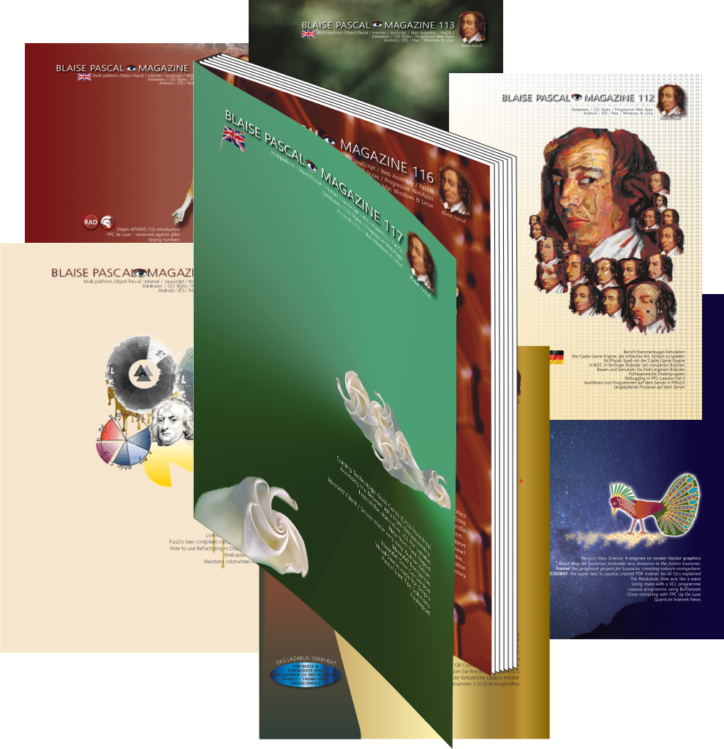
See all issues published:
you also can order them here
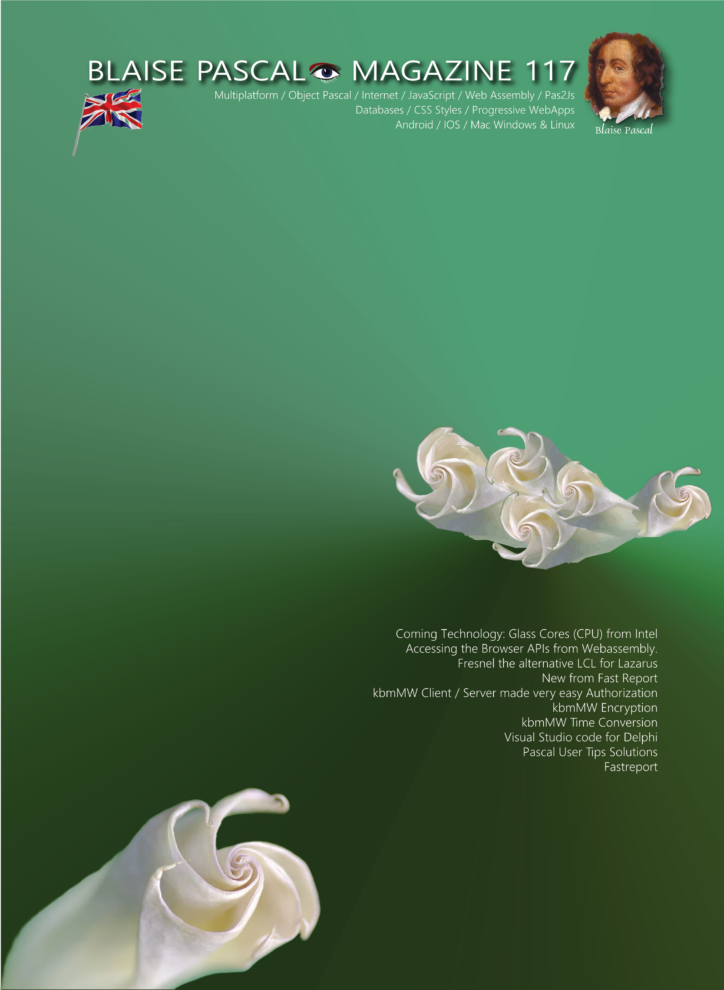
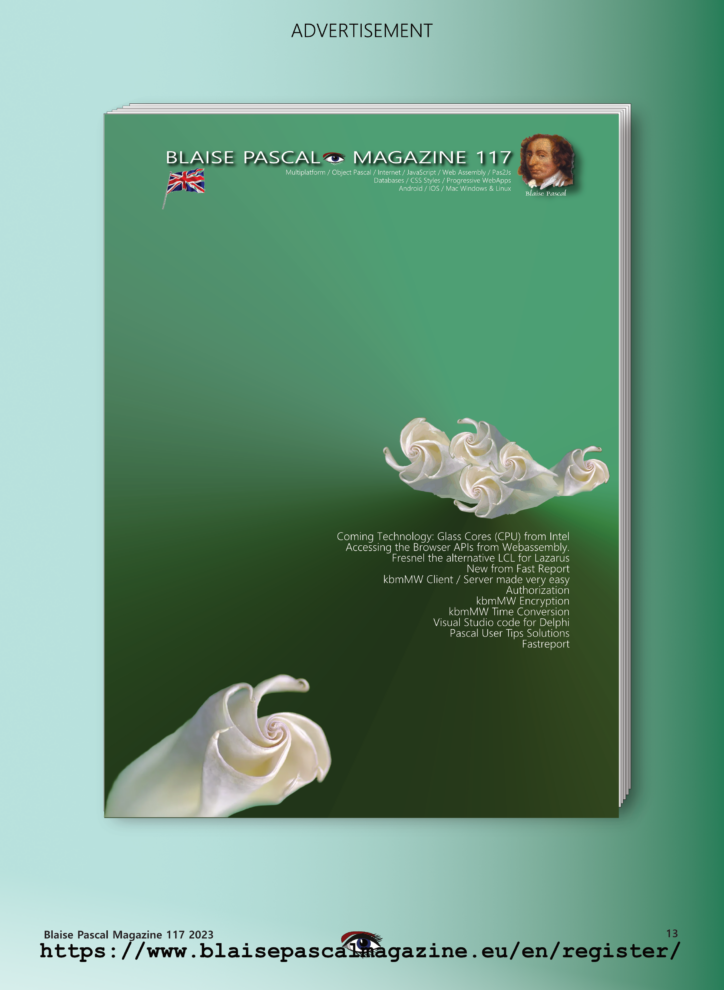
A preview of the next issue 117
ARTICLES
Coming Technology: Glass Cores (CPU) from Intel
Accessing the Browser APIs from Webassembly.
Fresnel the alternative LCL for Lazarus
New from Fast Report
kbmMW Client / Server made very easy Authorization
kbmMW Encryption
kbmMW Time Conversion
Visual Studio code for Delphi
Pascal User Tips Solutions
Fastreport

The NEW release of PS2JS Version 3 (Just click)
Order here
ARTICLES
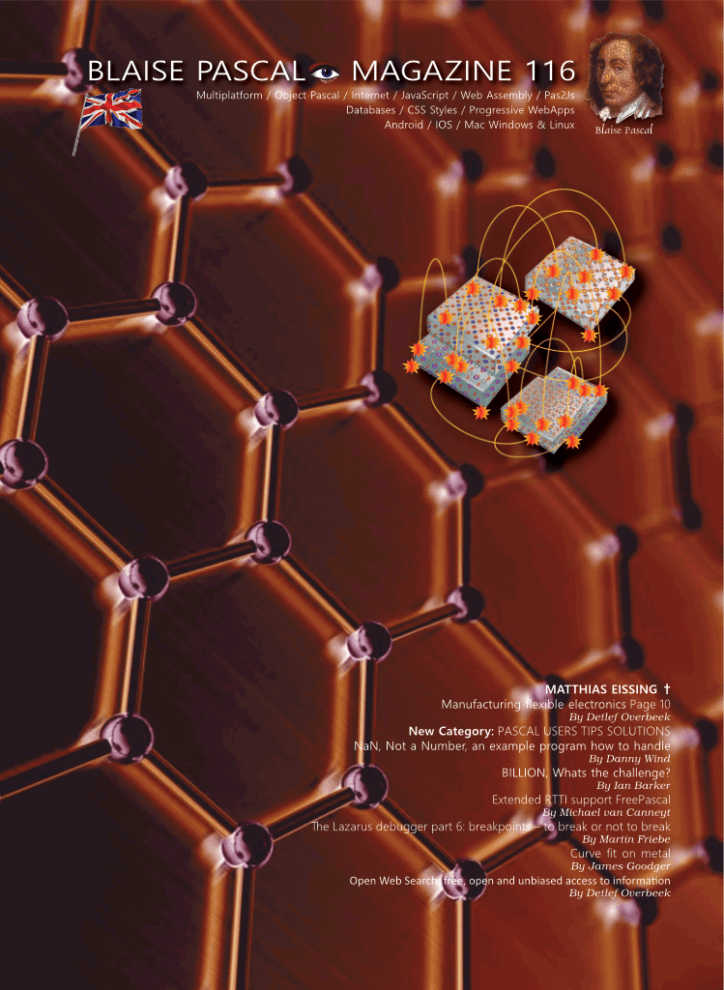
MATTHIAS EISSING †
Manufacturing flexible electronics By Detlef Overbeek
New Category: PASCAL USERS TIPS SOLUTIONS
NaN, Not a Number, an example program how to handle By Danny Wind
BILLION, Whats the challenge? By Ian Barker
Extended RTTI support FreePascal By Michael van Canneyt
The Lazarus debugger part 6: breakpoints – to break or not to break By Martin Friebe
Curve fit on metal By James Goodger
Open Web Search: free, open and unbiased access to information By Detlef Overbeek
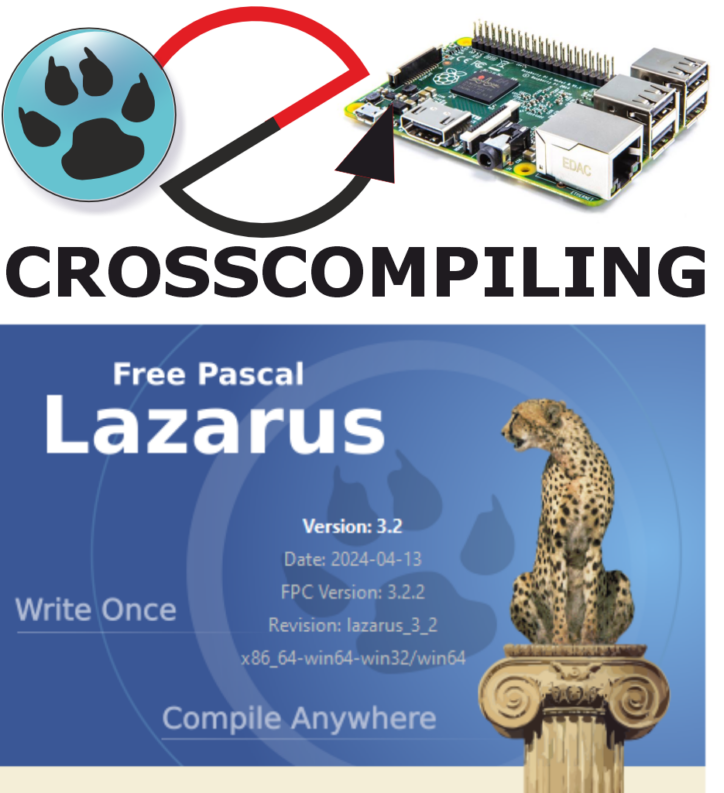
Installer for FPC/Lazarus
We now have created an example how to install
FPC/Lazarus as Stable Version / Trunk Version / Cross-compilation / Multi OS installer and Raspberry-pi versions
(Click on it)
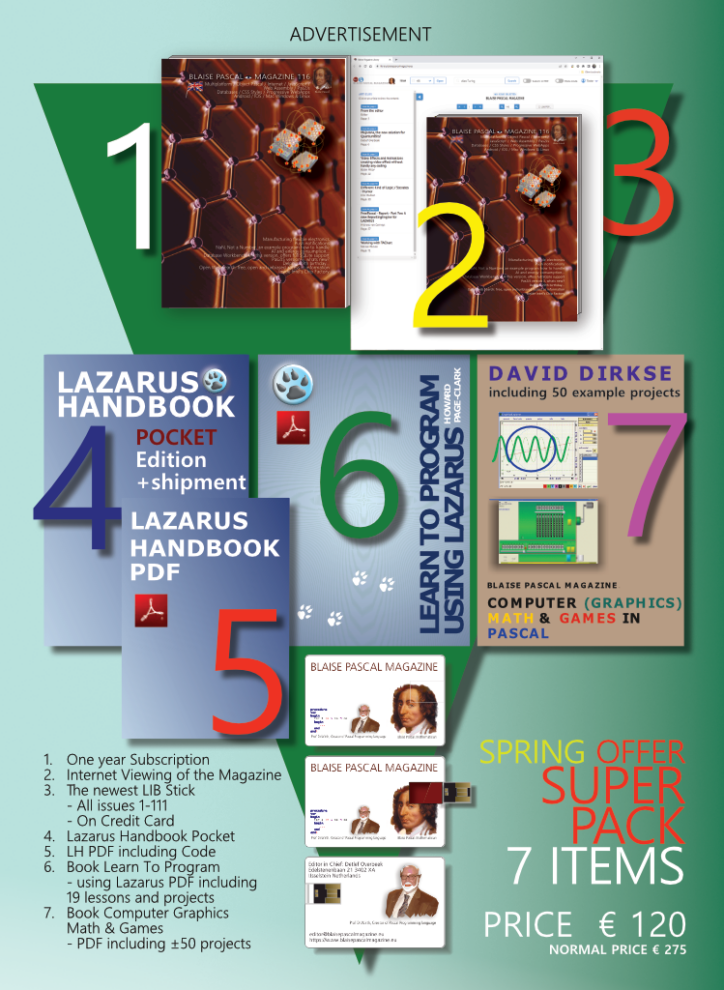
We have now a super-pack offer you cant refuse:
temporally – because of Christmas time
we reduced the price of the pack to € 120,00.
This pack contains everything we have available for you
SUPERPACK OFFER: € 120
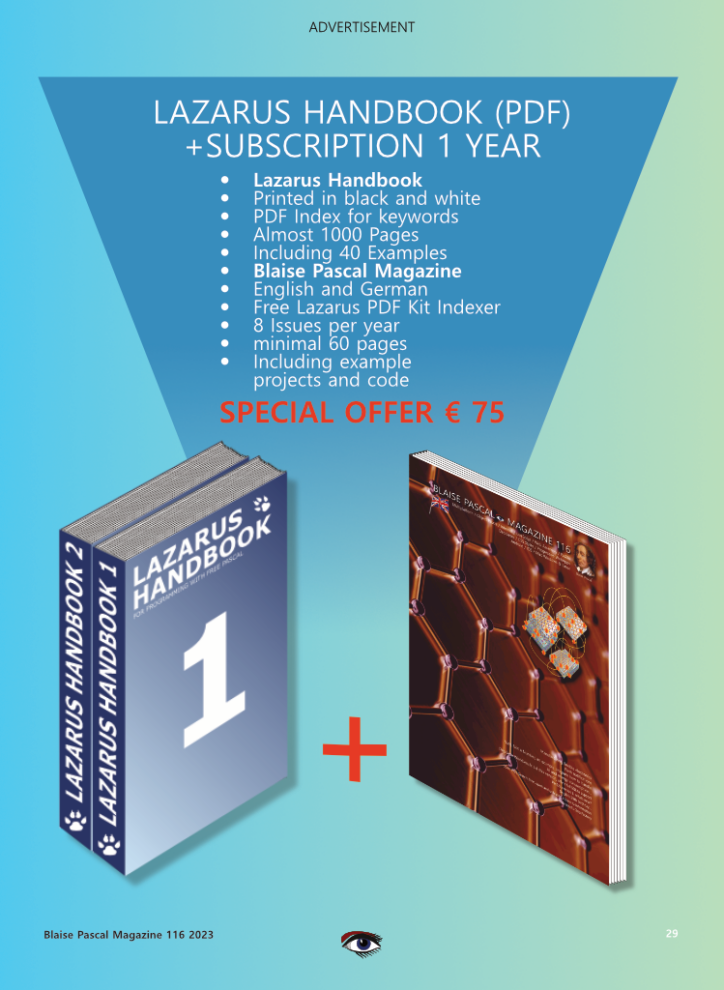
Here you can choose your subscription or renewal
Sie können jetzt einen kostenlosen TestAbo  zur deutschen Ausgabe des Blaise Pascal Magazines bestellen. Sie bekommen ein abo das aus zwei teilen besteht: 3 Monate neue Ausgaben und rückwärts 12 Monate vorhergehende Ausgaben des Magazines.
The English edition of Blaise Pascal Magazine  is now available for a free trial subscription.
You get a subscription that consists of two parts: 3 months of new issues and backwards 12 months of previous issues.
PDF overview of all published articles
over all issues 1 – 116
Great offer for subscribers: 1 year free internet viewing of your magazines.
You need to have a subscription.
To register or start a Subscription: Subscriptions → Register and download all
To find your personal download list (Just click):
https://www.blaisepascalmagazine.eu/your-downloads/ (first you need to login)
Problems downloading or finding your subscription?
Please contact admin @ blaisepascalmagazine .eu or call +31 6 21 23 62 68

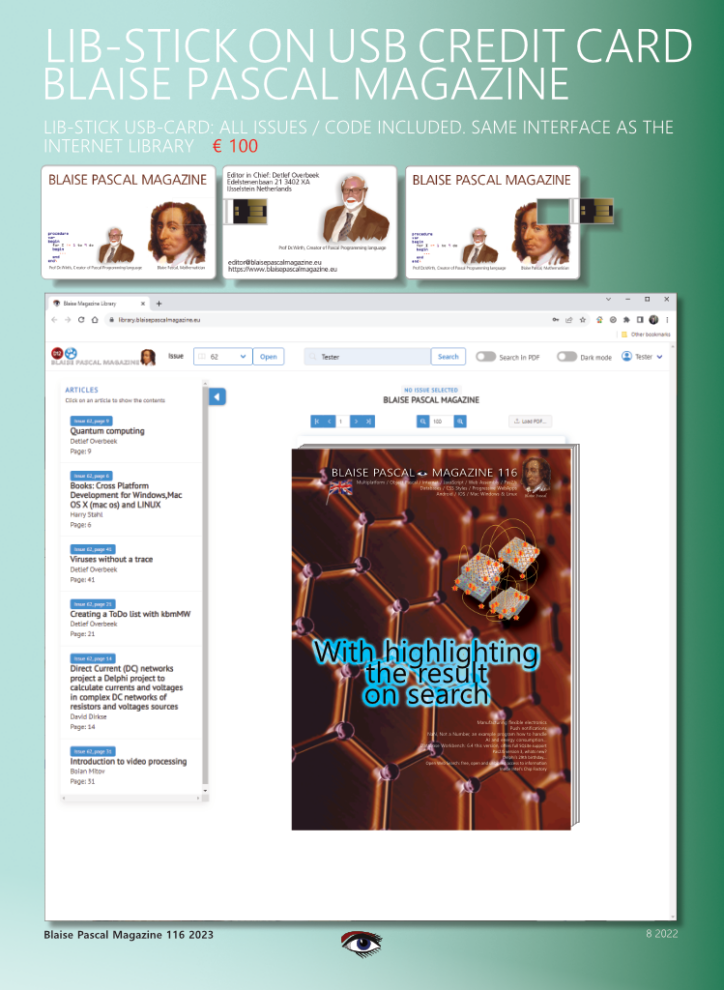
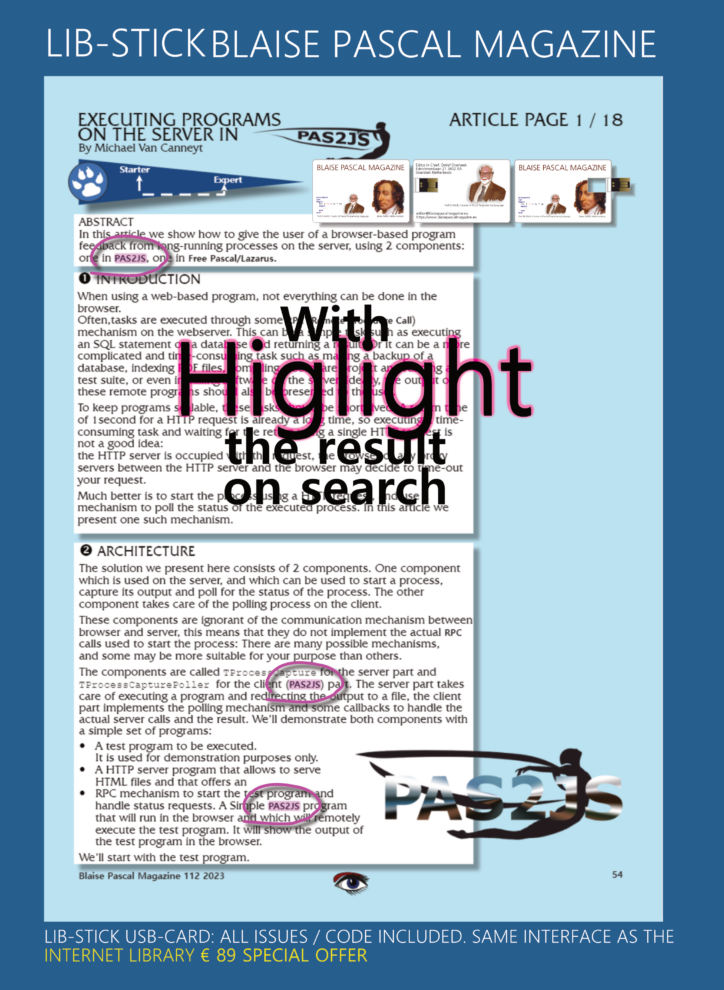
The LIBStick: USB Card containing all issues code and acces to the
Internet Library Search Engine : ILSE
EVENTS  EVENTS
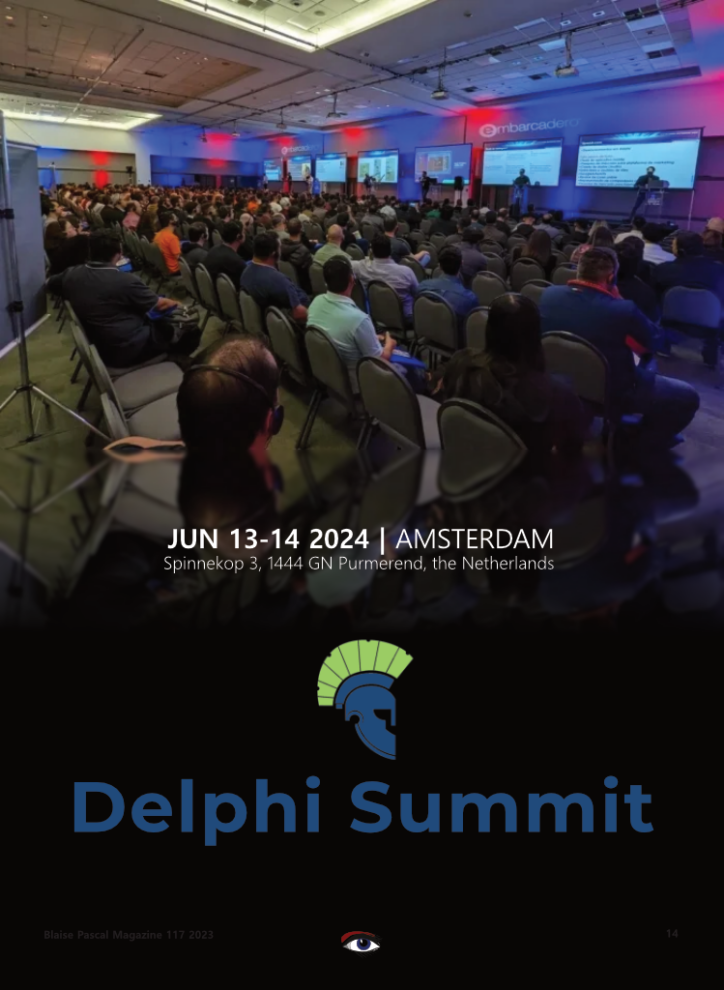
13th and 14th June – Location Spinnekop 3, 1444 GN Purmerend, the Netherlands
Details will follow…
We plan an International Pascal Cafe in Germany : Cologne (Köln) with the university of “Köln” in October 10/11 2024.
details can be found here: Click